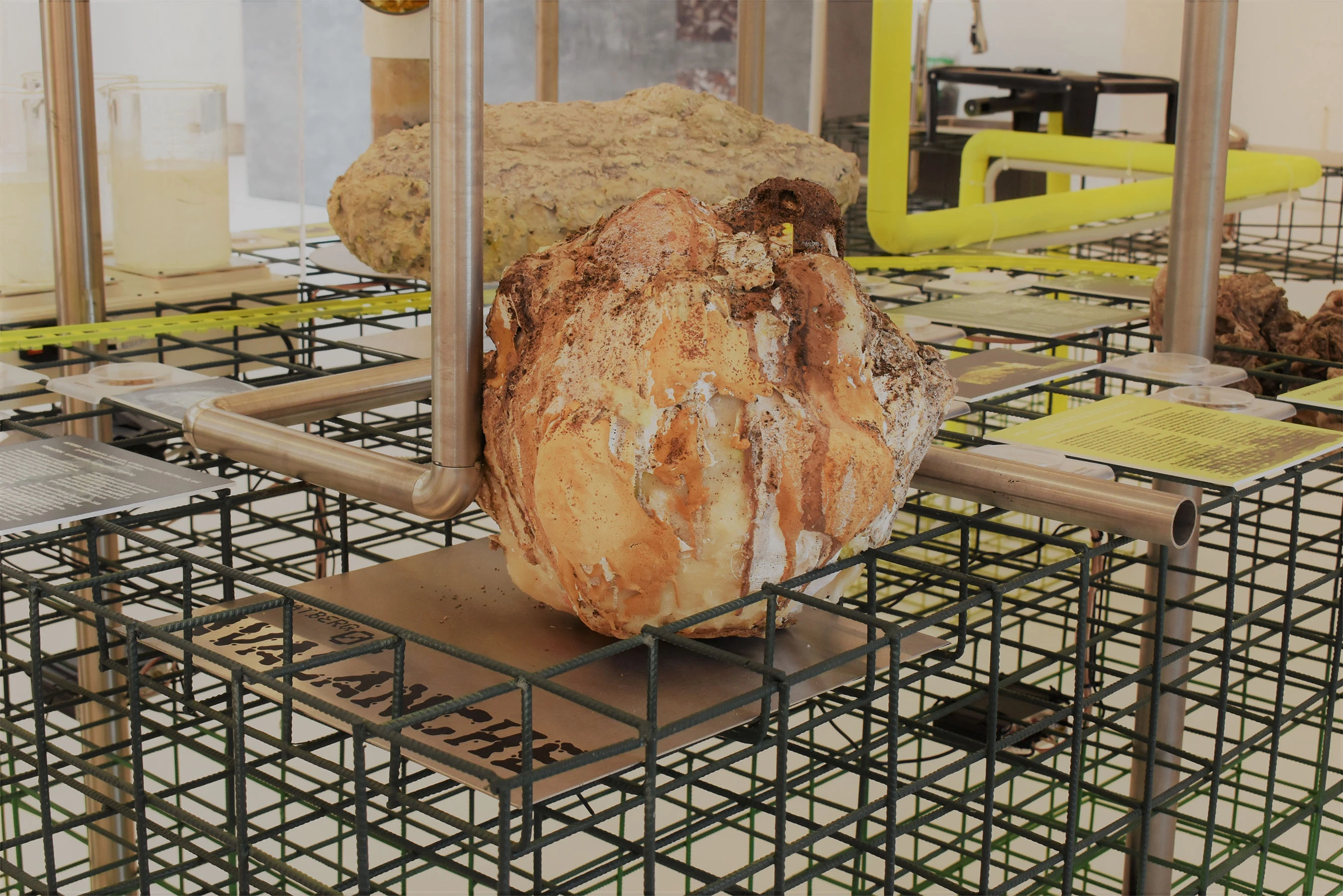
Fatbergs and Other Microbial Machines
“Fatbergs and Other Microbial Machines” was presented at the 2025 Milan Triennale in the We, the Bacteria exhibition.


“Fatbergs and Other Microbial Machines” was presented at the 2025 Milan Triennale in the We, the Bacteria exhibition. The installation presented five fatberg typologies gathered from different sewer ecologies around the world. Each fatberg underwent an autopsy, tracing the cultural habits, domestic rituals, waste streams, and material practices sedimented within metropolitan environments. Yet these objects were not presented as inert specimens or pathological anomalies. They were staged as forms of material architecture: synthetic constructions assembled through bacterial labor, mineral accretion, hydrodynamic force, and microbial agency.
In the project, three different scales came into play: a) the micro-scale of the kitchen, a domestic digestive organ that processes its own organic waste to power plants and other domestic organs; b) the meso-scale of urban infrastructures; c) the macro-scale of the territory, which points to how waste streams are exported outside cities. The project also pointed to the potential dissolution of the fatberg: either through bacterial processes that could eat it, or through “micro-biogrids,”—localized systems of recirculation and regeneration that reconfigure waste streams into productive ecologies and foster new energy alliances. A speculative mutation of the microgrid model, the “micro-biogrid”—translates energy infrastructures to microbial and metabolic systems. Rather than understanding infrastructures as hidden systems of extraction and disposal, the “micro-biogrid” proposes a distributed metabolic architecture in which bacterial communities, domestic spaces, and material residues enter into visible and reciprocal relations. The simultaneous projection and fragmented connection of three different scales evidenced that fatbergs are politically charged agents that reconfigure spatial logics, challenge the illusion of linear disposal, and reveal the ontological instability of modern infrastructures. Ultimately, the project called for rethinking waste as an active participant in shaping collective futures of human and more-than-human entities, anthropogenic and geological memory, and urban systems.
One intention of the project was to reimagine and reinvent the ways in which we expel biochemical assemblages produced by bacterial activities. If buildings could incorporate “micro-biogrids”-- digestive machines engineered to metabolize fats -- would reframe dirt, waste and abject matter, not as matter to be eliminated but as matter to be re-situated. “Micro-biogrids,” or digestive machines, if incorporated into living spaces, would redistribute visibility and power: metabolic processes currently relegated to infrastructural shadows would become governable, knowable, and ethically negotiable within everyday life. By recirculating waste as resource—producing biogas, heat, or soil substrates—these bio-grids would form new energy alliances between humans, microbes, and buildings, unsettling the ideology of disappearance that sustains contemporary sanitation.