Histories of Ecological Design and Planetary Cohabitation

Histories of Ecological Design and Planetary Cohabitation

Research

In parallel to the book Histories of Ecological Design; An Unfinished Cyclopedia (Actar, 2024), the project was assembled in an exhibition displayed at the Cooper Union. 

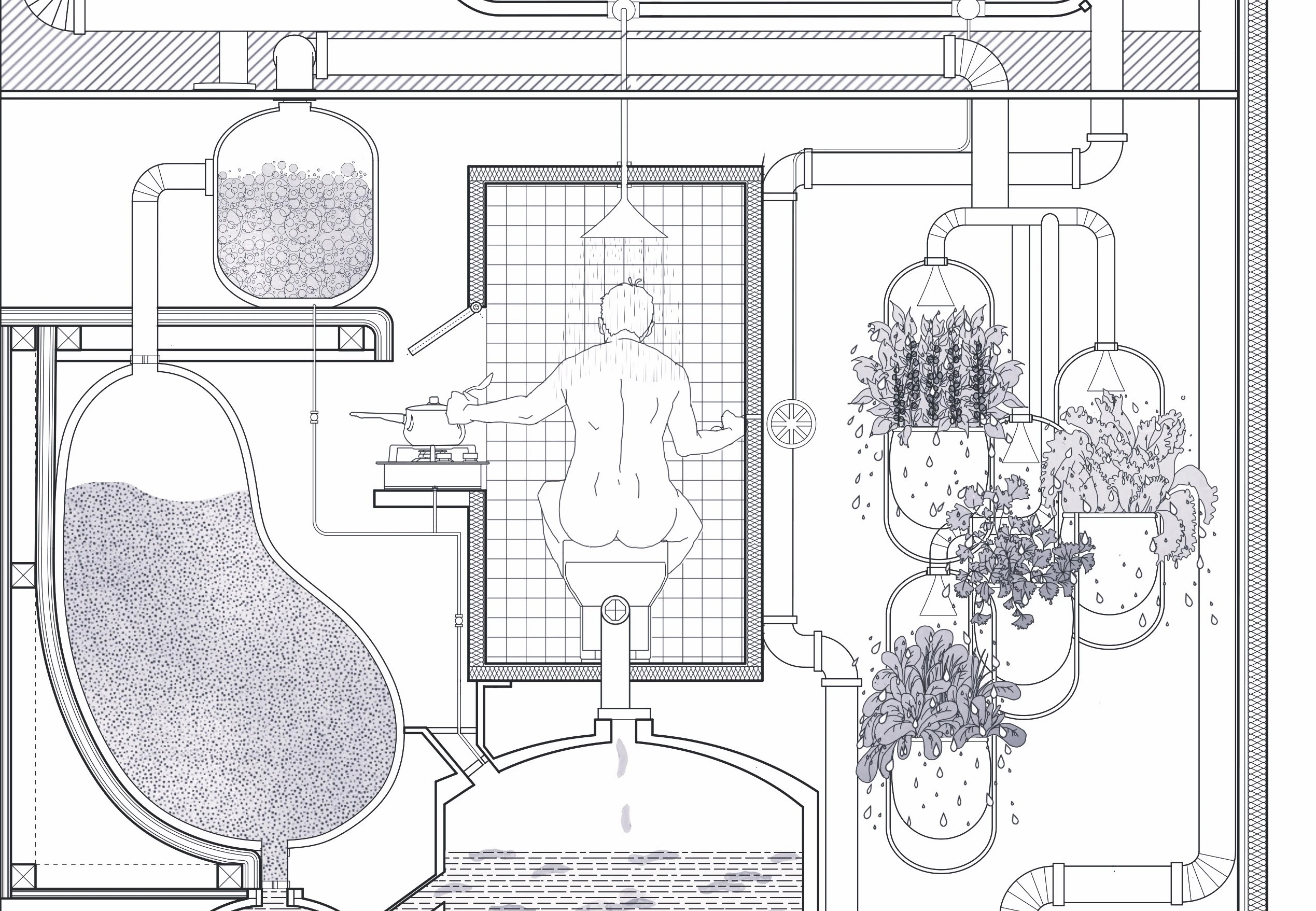
Each of the 18 chapters distributed in the book’s 3 parts [ I. Naturalism, II. Synthetic Naturalism, III. Dark Naturalism], were animated in original drawings that repurposed archival images as visual citations. We worked closely with specific archival objects and iconic images to contextualize visually the questions raised by each chapter, thread or story of ecological thinking. These drawings do not illustrate the text; they rather offer a different medium – ‘an active drawing’- where historical citations constitute an immersive living archive; they are experiments in representation via storytelling, fantastical juxtapositions across times, locations and scales; topoi where existential ideas about world orders migrate between different places and authors.

I. NATURALISM
I.I TAXONOMISTS
The history of ecology is rooted in the history of classification. The ubiquity of ecological concerns, as these have unfolded since the nineteenth century, has turned persistent taxonomical thinking into a type of design endeavor, in which the observation and analysis of plants and organisms are given form and value.  Taxonomical organizational tools have never been neutral, not even before language was applied to the representation of ecosystems and the feedback cycles of their subsystems. The project of organizing, visualizing, labeling, and classifying life conflated the vision of an imagined world order with the origins of ecological design. The classification of ecosystems illustrated not simply what the world was made of, but also what it should be made of, as befit the worldview of each author who dealt with the problem.
I.II EVOLUTIONISTS 
Charles Darwin’s Theory of Descent was enormously influential on the development of environmental theories at the turn of the twentieth century. Its impact was deeply felt not only by naturalists and biologists, but also by architects, designers, and planners, who transplanted the concept of biological evolution directly to formal principles and social structures. D’Arcy Wentworth Thompson, in particular, argued the forms of plants and animals could be analyzed with inordinate precision via geometry. For Ernst Haeckel, the underlying forces that direct the transformation of form were concrete, causal mechanisms that shaped life and all its variations. 
I.III IMMERSIONISTS 
The belief that nature holds divine qualities, both spiritual and political, was first articulated by the group of American Transcendentalists in Massachusetts in the 19th century. Deep immersion in the wilderness, into pure unshaven and untouched territories, formed a political and religious worldview based on a universal alliance between the self and nature. Wildness, in this light, was seen as a primal force that resists calculation and representation. The heir to these ideas was Frank Lloyd Wright, who equated God with nature with a capital “N” and espoused organicism, not only an approach to design, but also as a means to achieving a democratic regime that projected a mythical dimension onto society.
 I.IV BIOFUNCTIONALISTS 
The concept of unity with nature that the Bauhaus proclaimed did not lie far from the sermons of American transcendentalists and the organicism of Frank Lloyd Wright. What made it distinct, however, was the belief that the unity of nature could be literally transferred and reconstructed in man-made edifices, in complex incarnations of biological systems. Soil biologist Raoul Francé, who analyzed plants and their potential to offer “solutions” to technical problems, was widely read at the Bauhaus, and deeply influenced its leaders, particularly Wassily Kandinsky and Paul Klee. According to Oliver Botar, the Bauhaus masters were vitalist organicists that viewed the world and its components as nested hierarchies of organisms animated by an ineffable life-force.
I.V HOME ECONOMISTS  
For the female domestic reformers of the 19th century, the health of the house was a concept that extended to the health of the world at large. Oekologie was understood as a tool for combating ill health based on the principles of environmental science and home management. For Ernst Haeckel, oikos indicated an “outside:” a house of nature and the concept of inhabiting the world that called for documenting, categorizing, and visualizing the branches and interrelationships of life. For Ellen Swallow Richards, by contrast, the home was an “inside:” it referred to the life of domestic management linked to the health of its inhabitants. Therefore, oekologie was envisioned by the home economists as the projection of the interior to the outside world, and as a form of municipal housekeeping.
I.VI ACCLIMATIZERS   
“Acclimatizers” explore one means, in which Western colonialism inflicted violence, manifest in the bioengineering of newly discovered environments. The West’s encounter with unknown vegetal and animal species generated many theories on exploitation and made these territories prey to extraction and reformation. It was at this moment, that the notion of “acclimatization” became central to European Imperialism, so much so, that the French botanist Auguste Hardy declared that “the whole of colonization is a vast deed of acclimatization.” Colonial territories became bioengineering laboratories soon after they were discovered, serving as testing grounds for sociopolitical, economic, and ecological experimentation, and places where new ideas about health, acclimatization, climatic improvement, and spatial design were put into practice. The premises of these tests were  often based on the unfounded hypothesis, that the erasure of innate environmental characteristics would make the climate more fit for colonialist settlers. 
II. SYNTHETIC NATURALISM
II.I WORLD PLANNERS
Following World War II, in the new age of intensive industrialization, design involved the design of the planet itself, that is, the entirety of the planet’s surface on which life proliferated. Sociologist John McHale argued that humans had enlarged their ecological niche to include the whole planet. World Planners envisaged an idealized systemic analysis of the universe in which all patterns could be imagined as interlinked and engraved as subsystems of systems in a master plan of natural order. Each element could recur on various scales, nested within another. In this fantasy of organizational unity, which was projected onto the cosmos, the effects of micro-actions affected the macro-dynamics of the planet, advocating the recirculation and connectivity of all matter in the universe. 
II.II OUTLAWS
In the 1960s, in the context of  the Vietnam War and the unsettling atmosphere caused by rising pollution levels worldwide, “dropping out” of cities was a survival mechanism for thousands of young intellectuals in the US following Timothy Leary’s advice to “Turn on, Tune in and Drop out.”  Several self-sustaining communes emerged in the US Southwest; they were experiments in living, detached from urban networks, with the aim to recycle their waste, produce and distribute energy, and achieve a degree of autonomy while restoring equilibrium with nature. These laboratories also recorded their findings during the experimental dome-building process and developed their own “counterculture building language,” an extensive list of heuristic “how-to” advice.
II.III GARBAGE ARCHITECTS
“Garbage Housing” was a pedagogical, design-built experimental movement in the 1970s to transfer the operations of nature to technological systems by reusing leftover materials from global consumption as building materials. It was mainly spearheaded by the British architect Martin Pawley, who perceived buildings as interfaces of global resources, and proposed that consumer byproducts be fed back into the loop of production as new building materials. Garbage architects merged two predicaments of the time, the housing crisis and excessive waste flows, hoping to salvage two crises by feeding one into the other. The aspiration was that as natural systems recycle their wastes, by-products of urban environments might as well be recycled; an idea that sounds at first sight credible and worthy of pursuing, given that a new functional life could be attributed to material excrement. 
II.IV AUTONOMISTS
Autonomy was used in the 1970s as an ideational vehicle to shape the self-referential characteristics and language in the field of architecture. At the same time, it was also used to popularize an ecological and libertarian way of living and acting and to herald “autonomy” from the grid of urban supplies. After the oil crisis and a decade of environmental debates, the terms “self-sufficiency,” “self-reliance,” “life-support,” and “living autonomy” became part of a pervasive lexicon of alternative technologies. Transferred to the domestic realm, autonomy advanced the idea of the self-sufficient house, detached from context: a real-time habitation experiment in which architecture, systems theory, and human biology would blend together in the hope of radical social reform. Autonomy was not only an ecological, but also a political statement, one that announced a shift away from central authorities towards self-empowerment via involvement and dependence on the erratic nature of planetary forces.  
II.V CLIMATICISTS
The construction of a calibrated, monitored, and weather-controlled interior marks the rise of architecture as environmental design, an idea that emerged right after World War II reflecting the belief that scientific knowledge and expertise hold no political values. The provision of comfort—or alleviation of hardship, adversity, and environmental distress—provided design agency with a sense of purpose. This mission constructed a conditioned human subject and a universal concept of well-being, while making climatic performance the ultimate tool for measuring building efficiency. The promise of comfort was fulfilled through the monitoring of building performance, foreshadowing a new modernist ethos wherein humanist values could be quantified.
II.VI URBAN ACTIVISTS 
When viewed through the lens of community development and urban regeneration,  the history of ecological design encompasses everything from biophysical and material problems that involve natural ecosystems, to design interventions that aim at sociopolitical justice, diversity in growing communities, and the eradication of poverty, racism, and inequality. In the 1960s, the complexity of cities was increasingly studied as an analog of natural systems, not in terms of their biological and material structure, but rather in the  organizational patterns of their growth. Jane Jacobs’ endorsement of diversity, for example, transposed the principles of natural ecosystems to urban environments; essentially, she argued that diversity in ecosystems was analogous to diversity in communities. By the 1980s, the assumption that civic society and urban space could be based on natural ecosystems led to the emergence of the critical research field of political ecology, which viewed environmental problems as inextricably bound to social, political, and economic forces.
III. DARK NATURALISM
III.I SUBNATURALISTS
At present, human activity has profoundly altered the natural world, creating new states of nature in the most contaminated and polluted sites on earth. On a planet that has no more square inches of untouched environments, ecological architecture cannot be solely directed solely at the ethics of world salvation or the rhetoric of efficiency and performance. It rather upraises as a psycho-spatial or mental position, fueling a reality of change, motion, and action. The understanding of the environment as a complex territory of ambient, physical, and physiological interrelationships presents designers with opportunities to create deviant new natures out of contaminated conditions.  This position differs from utopia in that it does not explicitly seek to be right, but rather to recognize pollution and waste as generative potential for design. Instead of trying to synthesize or integrate design projects with an idealized version of nature, subnaturalists stage projects that reimagine toxicity and mechanical infrastructure.
III.II PLANETARIANS
Among its many effects, the pandemic sharpened our focus on how planetary problems land on earth as material problems that affect bodies and their lived experience. This is no longer the earth of the simulated and curated stage set that needs to be designed and whose resources can be diagrammatically redistributed as in Buckminster Fuller’s “World Games.” In these darker times, the modern view of the planet as theoretical speculation has dropped away; the planet is now a material system, not a flow chart. As Donna Haraway suggests, all the world’s creatures need land, soil, and ground, somewhere to live. The question of how the geologies of extraction—fracking, mining, drilling, processing, and heating—generate space and power regimes become central not only to politics, but also to design. The Planetarians do not intend to redesign the planet as a whole, but rather to challenge the established convictions of the modern world and to imagine local interventions that would modify, hack, or even dismantle previously selected energy infrastructures.  
III.III NON-HUMANS
Designing for the benefit of the entire assemblage of planetary species—animal, vegetal, microbial, techno-biological, as well as human—in the face of anthropogenic disasters entails acknowledging the complexities of multi-species collaboration and requires a thorough study of living systems and their interdependencies. In recent years, architects and designers have envisioned homes for bats, butterflies, crickets, and other animals; They have also designed habitats for bacterial, fungal, and marine populations, such as mussels and oysters to reduce environmental imbalance and enhance biodiversity, focusing on debates of speciesism and cohabitation. The non-human turn also implies a new materialism, designing with active matter, and the view of the nonhuman world, not as a passive historicized context to be studied and acted upon, but as a vital agent.
III.IV RESILIENTS 
Although the term lacks clear definition, resilience is most commonly framed as an equitable model of governance and a means through which society can maintain its order and adapt to or manage risk. As a regime, resilience is not bound to any explicit design strategies. In most cases, it is translated into green spaces and fault-tolerant infrastructure systems, enabled by technology to absorb stormwater like sponges, remediate air pollution, and moderate extreme temperatures. Resilience has been subject to rife criticism for leading to uneven responsibility among parties, preserving the status quo, taking a techno-modernist approach to urban planning, and above all capitalizing the ecological footprint that political regimes have subsumed  as a financial asset. As Italian sociologist Maura Benegiamo has emphatically argued, resilience ignores the stark disparities in environmental vulnerability and the influence of power dynamics on environmental issues.
III.V LAND NARRATORS 
Land narrators mark an epistemic shift: from an admiration of subliminal landscapes as pure and virgin, to the co-construction of spaces with the land, its species, materials, and narratives, as an embodied practice. Mississauga Nishnaabeg writer and academic Leanne Betasamosake Simpson explains that such practices lead to an alternative perception of environmental theory, which cannot simply be an intellectual pursuit. She notes that theory is “woven within kinetics, spiritual presence, and emotion. It is contextual and relational.” This line of reasoning is a critique of modern ecology itself, which relies on metrics, bureaucratic rationalization, legal systematization, and general integration in the capitalist economy in order to manage and maximize resource extraction. The idealization of a building as a “flower,” standing alone as a visual and technical pursuit, is thus no longer a relevant enactment of environmental forces. The question now becomes how ecological design can keep at bay an uneven balance of power and eliminate injustice and inequality, including poverty, racism, and neocolonial violence. 
III.VI LIVING FABRICATORS
Growing from ancient alchemical practices and a genealogy of experiments on chemical computation, the ideas motivating the living fabricators lie in the blurring of boundaries between living and non-living entities as well as the aspiration to control design by animating and orchestrating inner material forces. Understanding design as a growth process of organic substances that can be steered to a projected outcome is by no means a new concept. What is different here, however, is the way in which such an enterprise has been shaped by technological instrumentation, particularly computational algorithms. In this light, ecological design amounts to an evolutionary design process that unfolds in several stages and lifecycles through material experiments as analog computation tools that attempt to join the principles that govern living systems and machines.
ASCII source image