Making Fatbergs
Making Fatbergs


Fatberg - Avalanche
Fatberg - Saponite
Fatberg - Sclerosis
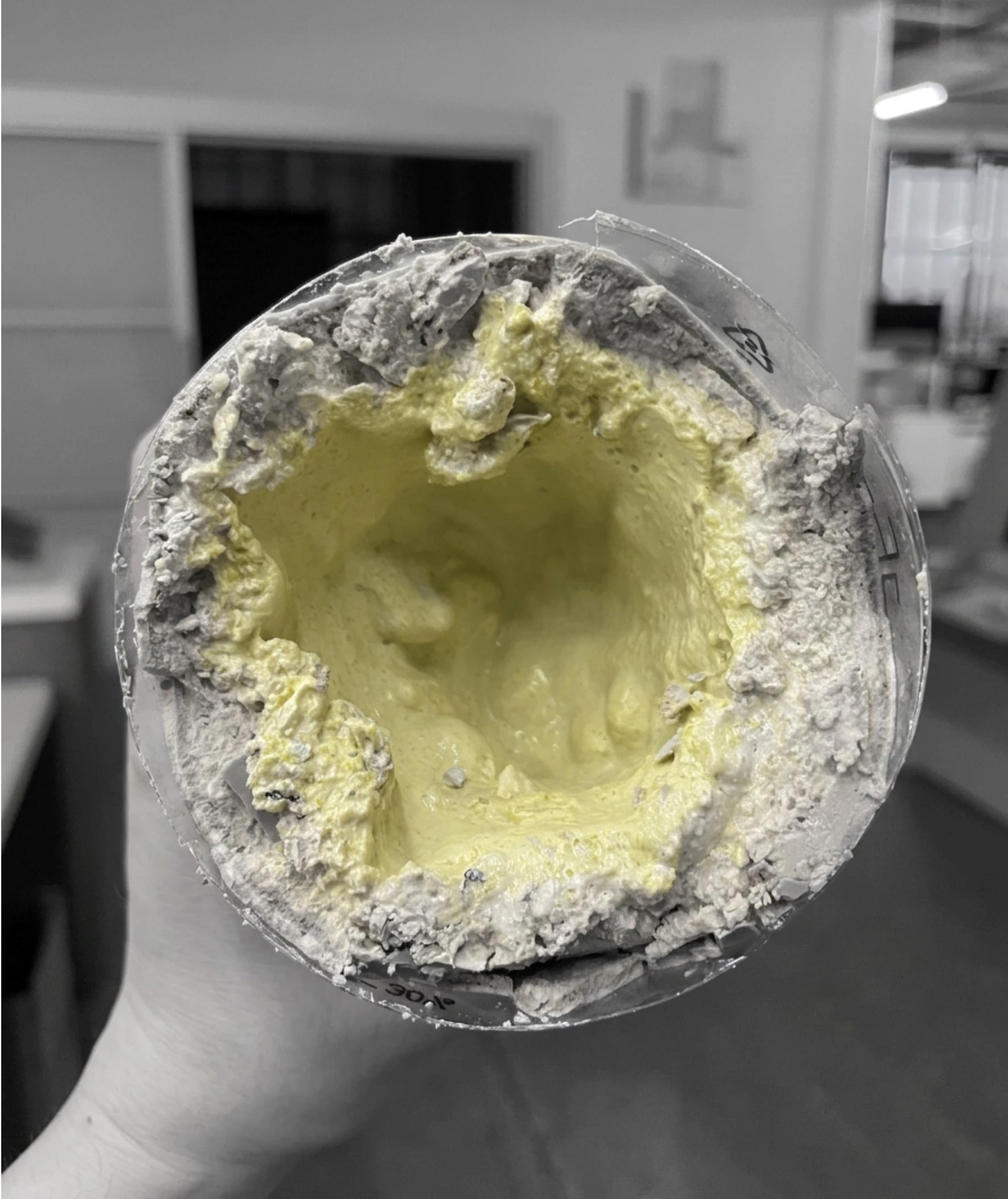
Fatbergs erupt into public consciousness as monstrous reminders that cities cannot fully digest themselves. They surface not simply as technical failures, but as uncanny events that reveal the hidden life of urban metabolism. In October 2024, thousands of mysterious black spheres washed ashore on some of Sydney’s most iconic beaches, prompting closures and public alarm. Initially appearing as alien objects or industrial debris, analysis later revealed a biochemical assemblage of human feces, methamphetamine residues, hair, fatty acids, and food waste: an oily constellation of urban leftovers congealed through currents, turbulence, and microbial action. What returned to shore was not random matter, but a displaced archive of collective habits, transformed through a slow choreography of viscosity, density, and the eddies subterranean hydrodynamics.
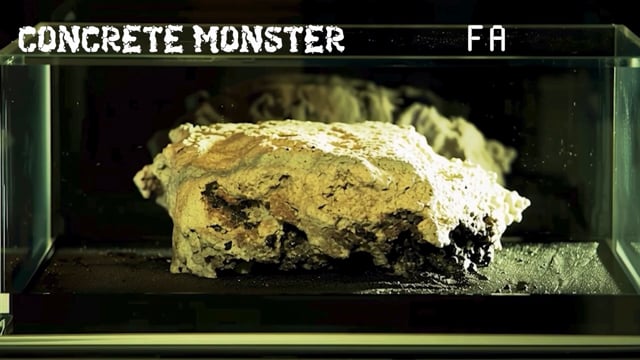
In the installation “Fatbergs and Other Microbial Machines,” presented at the Triennale di Milano in 2025, five types of fatbergs presented themselves as architecture; not because they were designed, but precisely because they were not. Rather than the architect's authorship, each structure acquired its own organizational principles, absorbing the spatial, chemical and ecological conditions of its environmental surroundings. The gyre operated as a hydrodynamic architecture: a whirling vortex body whose form emerged through currents, turbulence, and centrifugal force. Like an oceanic eddy or atmospheric storm system, it assembled matter through rotational movement within the body of a liquid gyre. Sclerosis was a calcifying architecture of congestion. Resembling arterial plaque, it thickened through gradual sedimentation and hardened through the slow chemistry of fats and calcium, transforming pipes into bodily infrastructures of blockage and ossification. The avalanche emerged through a logic similar to a snow avalanche moving downhill: an accumulation of forces through movement itself. Discarded materials in the sewer adhered to fatty residues and coagulated into hollow, but enlarging bodies in a material choreography of adhesion. The concrete monster emerged as an infrastructural geology: a dense hybrid of sediment, sanitary products, microbial activity, and domestic residue that hardened into an urban lithosphere. Finally, saponite transformed slowly into a soap-like mineral body, producing a living archive in which bacterial colonies carved cavities and tunnels through hardened strata. Together these entities demonstrate that architecture can arise from metabolic processes in continuous negotiations between human and more than-human actors. Digesting, hardening, breathing, sedimenting, and evolving, their agency lies not in consciousness, but in microbial labor and material self-organization, in their capacity to reshape the spaces through which they move.