Prototype for a Metabolic Home
A fictional house that metabolizes its waste| Curatorial Concept for the 2022 Tallinn Architecture Biennale


The Metabolic Home was a curatorial initiative for the 2022 Tallinn Architecture Biennale to redefine the concept of habitation urging visitors to participate in a curated experiment. Each room of the house exhibited how metabolic processes related to food are linked to everyday domestic spaces and activities.
With the Metabolic Home, we were interested in the house as a microcosm of the world and a test bed for how resources could be recirculated. The house was in many respects an allegory to larger as well as smaller spheres of action, but at the same time it rendered an intimate space that brings ideas on recycling and regeneration to everyday life.
To build the house, we assigned different programs to different architects, with the prerequisite that all parts would “communicate” with each other, receiving the waste matter of other programs as input and converting it to resources -as output. For example, the kitchen was the place of processing organic matter, while the garage was a place to upcycle leftovers of other rooms.
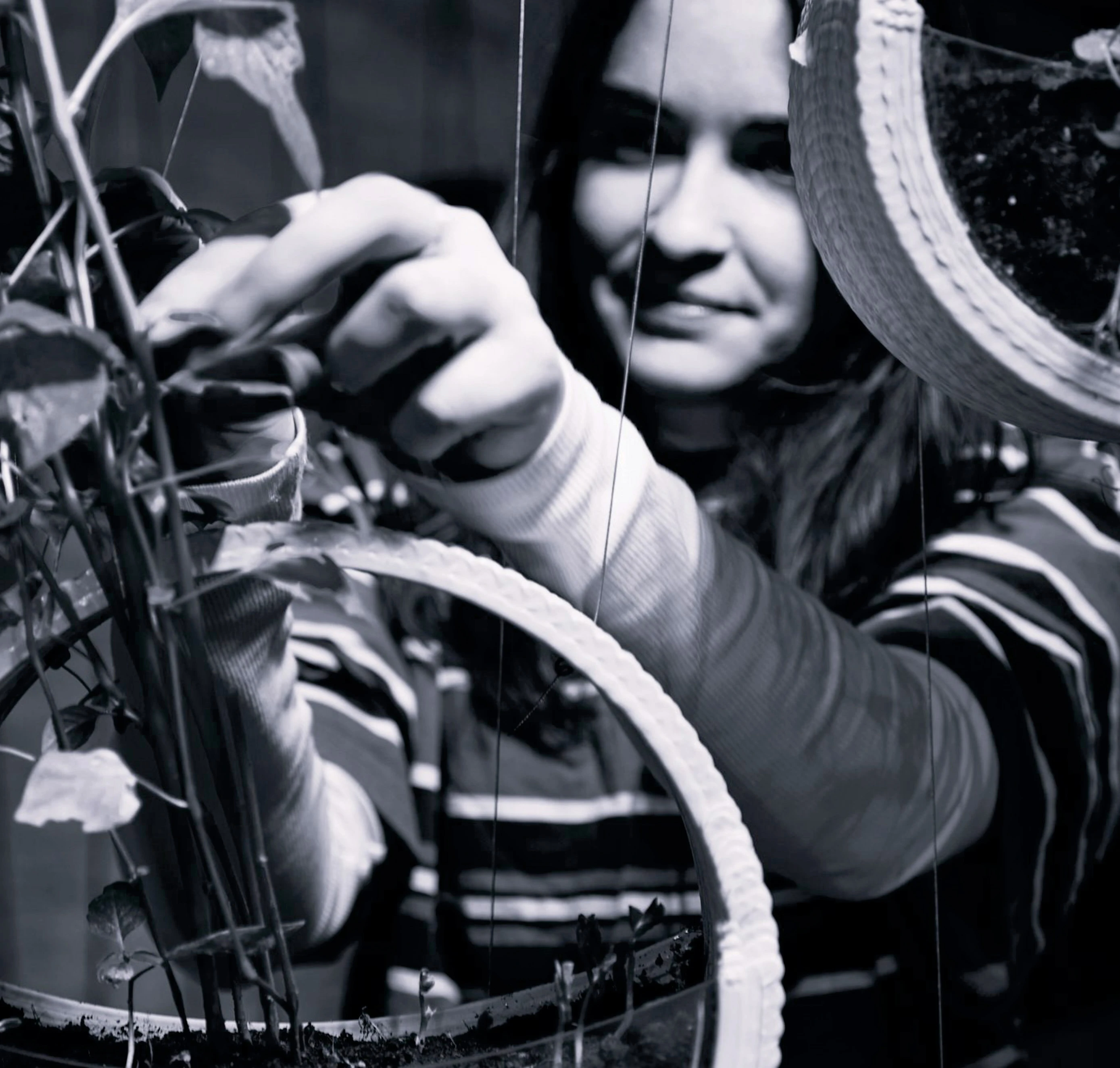
Producing food was presented in a vertical robotic garden;
processing in an interspecies kitchen;
ingesting in a rewilded dining room;
digesting in a lounge with an edible outer envelope;
hydrating in a toilet that endlessly recirculates and filters water;
breaking nutrients in a vertical terrace for harvesting;
upcycling in a garage made of carbon negative voxels.
Each domestic space was part of a larger domestic ecosystem and interacted with the other house parts in a feedback chain of resource exchanges.
We were interested in the reconstruction of the house as a living machine and a digestive system that receives human output and waste in all its forms and converges it to various usable forms. At the same time, these conversions may generate new spatial alliances between parts and programs; between kitchen waste and a bathtub, a toilet, and a garden; a bioreactor and a bathroom. Such new programmatic and experiential alliances display reasons, modes, and trajectories for existential change. This portrayal of the home urges viewers to look at debris, the waste of our own production processes (and all interrelated social problems that are linked to the production and transportation of waste), in a visceral way; via the raw ecologies of our bodies and the understanding that these problems are not simply statistical and abstract. They cannot just be relayed to the management of resources, but they're landed on bodies and on the food we eat, the water we drink, as well as the air we breathe.