THE METABOLIC HOME
What do space capsules, submarines, and office buildings have in common? Each was conceived as a closed system: a self-sustaining physical environment demarcated from its surroundings by a boundary that does not allow for the transfer of matter or energy.The history of twentieth-century architecture, design, and engineering has been strongly linked to the conceptualization and production of closed systems. As partial reconstructions of the world in time and in space, closed systems identify and secure the cycling of materials necessary for the sustenance of life. Contemporary discussions about global warming, recycling, and sustainability have emerged as direct conceptual constructs related to the study and analysis of closed systems.From the space program to countercultural architectural groups experimenting with autonomous living, Closed Worlds documents a disciplinary transformation and the rise of a new environmental consensus in the form of a synthetic naturalism, wherein the laws of nature and metabolism are displaced from the domain of wilderness to the domain of cities and buildings. While these ideas derive from a deeply rooted fantasy of architecture producing nature, Closed Worlds displays their integration into the very fabric of reality in our contemporary cities and buildings.Closed Worlds presents an archive of 39 historical living prototypes from 1929 to the present that put forth an unexplored genealogy of closed resource regeneration systems. Prototypes are presented through unique discursive narratives accompanied by historical images, and each includes new analysis in the form of a feedback drawing that problematizes the language of environmental representation by illustrating loss, derailment, and the production of new substances and atmospheres. Each drawing displays a feedback loop, wherein the human physiology of ingestion and excretion becomes the combustion device of an organizational system envisioned for humans, animals, and other live species. The moments of failure portrayed when closed worlds escape the designed loop cycles raise a series of questions about the ontology of autonomous enclosures.The book also showcases a timeline of the 39 prototypes, illuminating the ways in which they have contributed to the idea of “net zero” in our contemporary culture of sustainability. The timeline highlights the evolution of total circular resource regeneration, from military research and the experiments of NASA’s space program, to more contemporary manifestations such as the benefits of the housing industry, countercultural practice for autonomous living in the city, nostalgia for the homesteading movement, and ecological tourism and environmental capitalism.This book examines ecological questions viscerally, via the raw ecology of our bodies and their excrement. It studies recycling not as a statistical problem relayed to the management of urban resources but as a basic bodily reality affecting the water we consume and the air we breathe. To write a counter-history to the established sustainability axiom “cradle to cradle,” one needs to look at shit. Only through this raw confrontation may the ecology of life be somehow useful. To avoid clichés of sustainability, shit might be our only way out.BOOK DISCTINCTIONSFinalist for the 2019 “Cornish Family Book Prize” by the National Gallery of Victoria in Melbourne, Australia for my book The Architecture of Closed Worlds, Or, What is the Power of Shit (Lars Muller Publishers &Storefront for Art and Architecture, 2018), honoring excellence and innovation in art and design publishing internationally. The winner and five finalists were chosen from near a hundred entries around the world during the Melbourne Art Book Fair.The Architect’s Newspaper selected The Architecture of Closed Worlds as a top summer read in 2018.Strelka magazine selected The Architecture of Closed Worlds as one of six best books for a broken planet in May 2019.Artbook marked The Architecture of Closed Worlds as staff “hands down” favorite design read in December 2018.BOOK REVIEWSJournal of Architecture: “The Architecture of Closed Worlds” by Mason White, Vol.24, No.6 (February 2020).PINUP: "Full Circle" by Jack Gross, No.27 (fall/ winter, 2019).Revista Plot: Book review in Spanish, no. 47 (fall 2019). Metropolis: “Why Architects Need to Get Dirty to Save the World” by Mimi Zeiger (October 2018).Archinect: “37 Fearless Moments of Modern History: A Review of ‘The Architecture of Closed Worlds” by Shane Reiner-Roth (February 2019).Architect’s Newspaper: “Lydia Kallipoliti cracks open yesterday's sealed techno utopias” by Fred Scharmen (May 2019). Abitare: “The Closed Worlds of Lydia Kallipoliti” by Fabrizio Gallanti (May 2019). BOOK INTERVIEWSMonocle: Closed Architecture, Interview Feature (August 2018).Archisearch: Interview with Lydia Kallipoliti on The Architecture of Closed Worlds (October 2019).Haaretz newspaper (Israel): Interview with Lydia Kallipoliti by Dan Handel (April 2020): “Did you think living in a bubble is utopia?”CREDITSRESEARCH TEAM: Alyssa Goraieb, Hamza Hasan, Tiffany Montañez, Catherine Walker, Royd Zhang, Miguel Lantigua-Inoa, Emily Estes, Danielle Griffo, and Chendru StarkloffFEEDBACK DRAWINGS: Temitope OlujobiCOPY EDITOR: Maureen BemkoIMAGE EDITOR AND PERMISSIONS ASSISTANT: Maria VollasCOMMENTARY CONTRIBUTORS: Ross Exo Adams, Albert Narath, Wulf Böer, Caroline Maniaque, Jonathan Massey, Janette Kim & Eric Carver, Beatriz Colomina, Theodora Vardouli, Christina Ciardullo, Daniel Barber, Peder Anker, Mitchell JoachimBOOK SPONSORS: The Robert S. Brown ’52 Fellows Program at Rensselaer Polytechnic Institute, Elise Jaffe and Jeffrey Brown, PentagramRESEARCH SUPPORT: Syracuse University (School of Architecture), Rensselaer Polytechnic Institute (School of Architecture)
The Architecture of Closed Worlds, Or, What is the Power of Shit
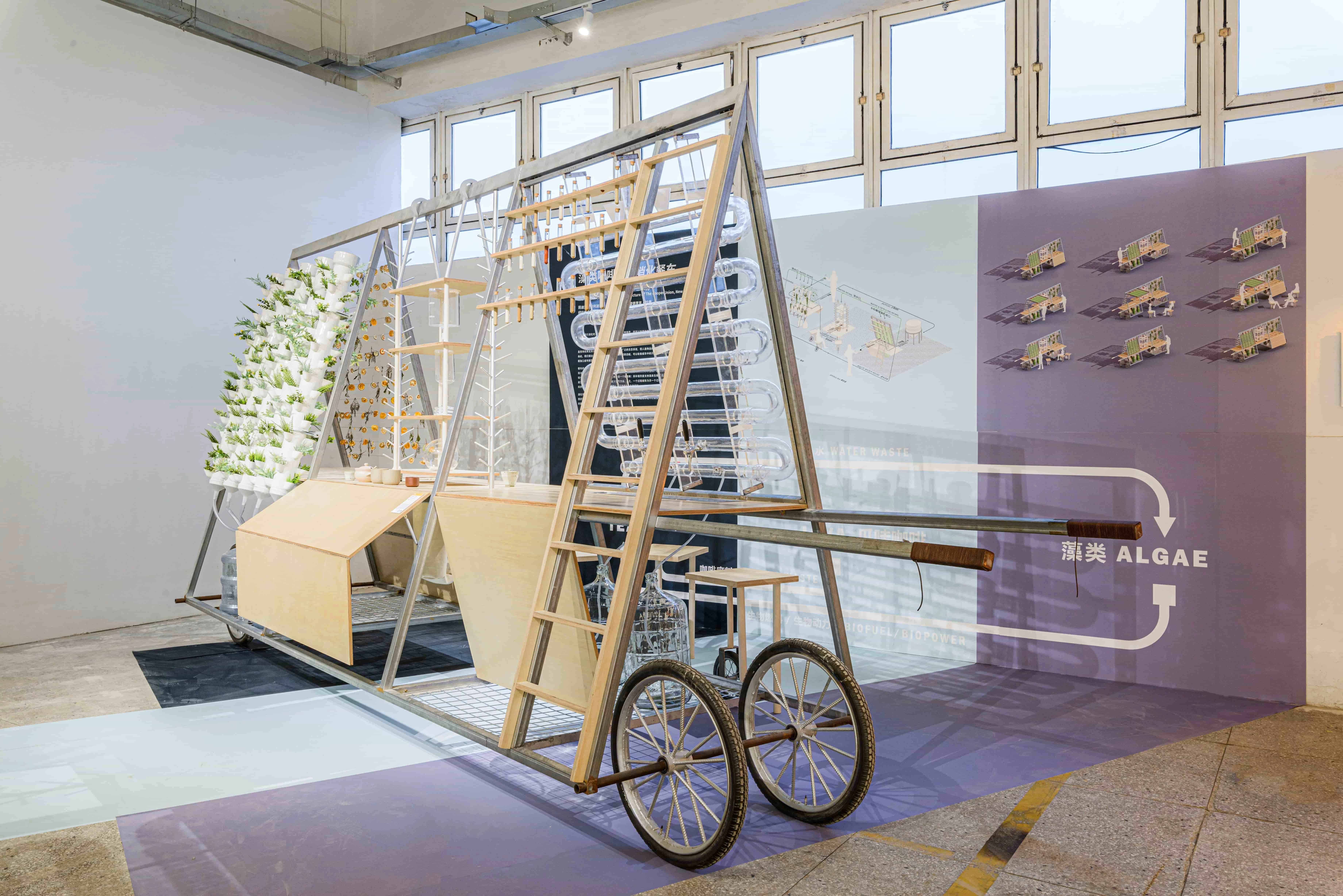
Algae Sips and Java Brews

MESSAGE IN A BOTTLE

LIFE ON MARS
The term ecological design was coined in a 1996 book by Sim van der Ryn and Stewart Cowan, in which the authors argued for a seamless integration of human activities with natural processes to minimize destructive environmental impact. However, ecological design harks as far back as Ernst Haeckel’s definition of the field of ecology and Henry David Thoreau’s manual for self-reliance.Since World War II, contrary to the position of ecological design as a call to fit harmoniously within the natural world, there has been a growing interest in a form of a synthetic naturalism, where the laws of nature and metabolism are displaced from the domain of wilderness to the domain of cities, buildings, and objects. With the rising awareness of disturbances in the planetary reservoir, the field of ecological design has signified not only the integration of the designed object or space in the natural world, but also the reproduction of the natural world in design principles and tools through technological mediation. Rather than a deep appreciation for nature’s equilibrium, ecological design might commence with the synthetic replication of natural systems. Histories of Ecological Design presents conflicting definitions and concepts of architects and designers and the parallel histories of their intellectual positions toward environmental thought from the 19th century to today. To survey the formation of this field, the context is not exclusively examined chronologically, but also in connected worldviews, each rendering evolving perceptions of nature, its relation to culture, and the occupation of the planet by human and non-human subjects. The book showcases that ecological design starts with the reconceptualization of the world as a complex system of flows rather than a discrete compilation of objects, which visual artist and theorist György Kepes has described as one of the fundamental reorientations of the 20th century.
Histories of Ecological Design;An Unfinished Cyclopedia

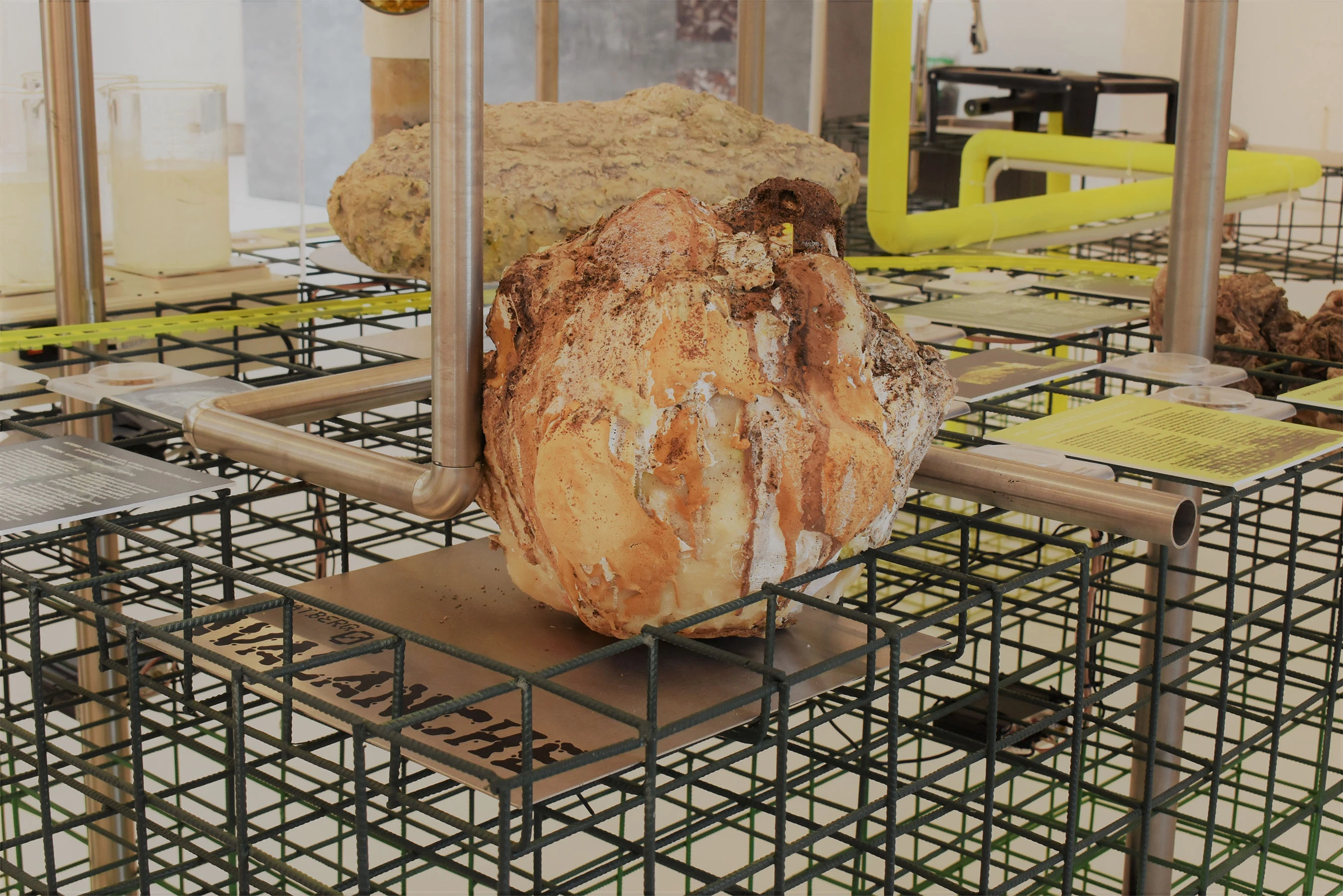
Fatbergs and Other Microbial Machines

Microclimates

CLIMATE HOUSE 2020, Or, How to Hack Your Domestic Machines
EDIBLE; OR, THE ARCHITECTURE OF METABOLISM

Exploding Closed Worlds
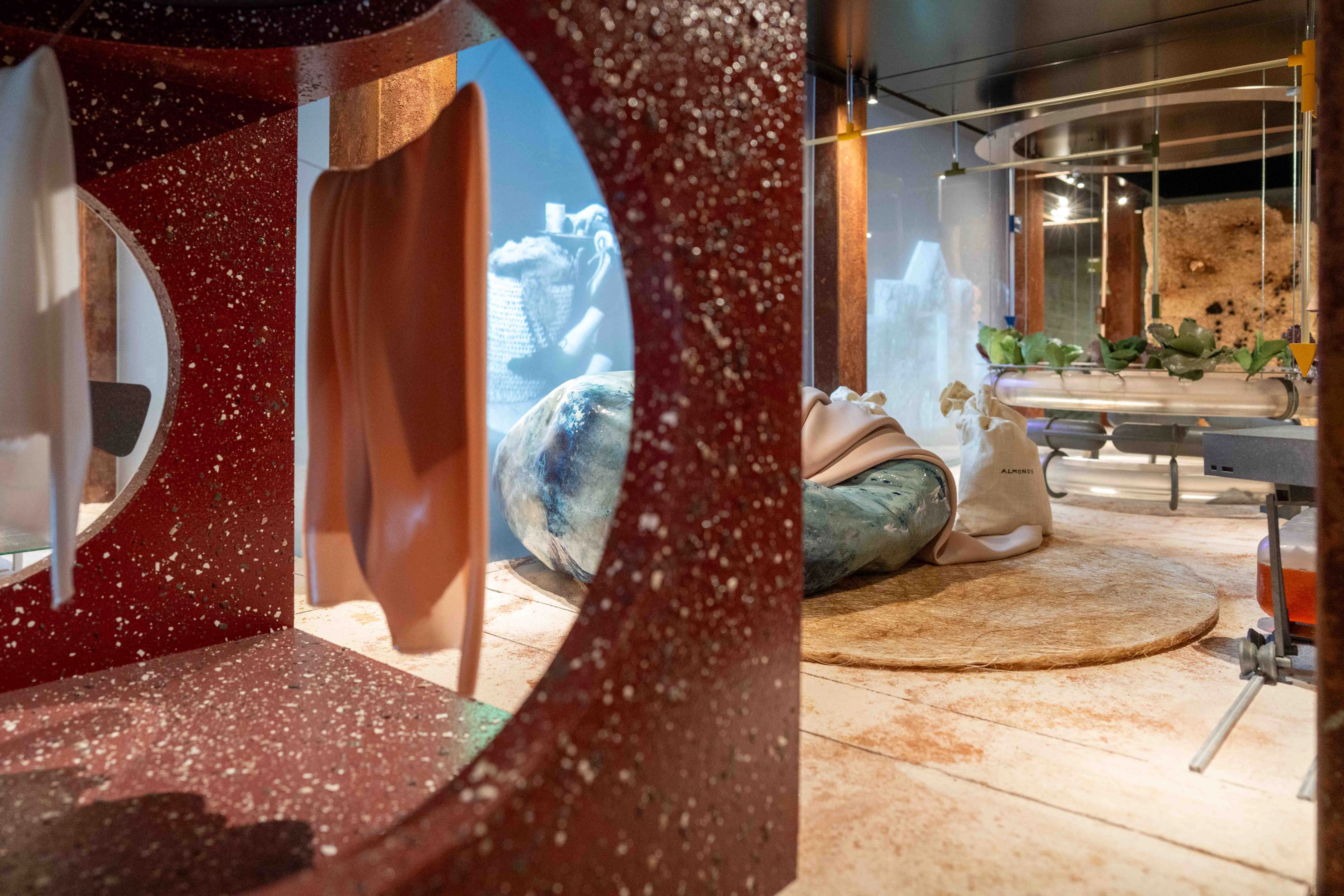
Building Metabolism challenges architects, planners, and environmental designers to rethink planetary food systems along with architecture's expressive capacity to metabolize, digest, and generate resources. In many ways, we metabolize the planet, and the planet in turn becomes the repository of our excretions. This reciprocal, primordial, and interdependent relationship is mediated through architecture: the site where bodies are housed, resources are consumed and decomposed, and exchanges between micro and macro climates are registered.The book is organized around two interconnected scales of habitation: the Metabolic Home, a stage set for domestic occupation, and the Planetary Home. The home and the planet are examined as living experiments, where humans and other species, processes of ingestion and excretion, and the material resources of space and territory become entangled components of a larger metabolic system. The contents are further divided into everyday domestic programs connected to metabolic processes, each exhibiting a “project narrative” as an actionable prototype, essays and “cookbooks,” as design propositions related to metabolic processes and food. What we ingest and excrete—what we leak—is both a material and political act. Inputs and outputs from human bodies, more-than-human bodies, and buildings are not passive residues, but active agents within ecological assemblages. They participate in shaping environments, moods, cognition, energy flows, and political capacities.Book Contributors: Andrés Jaque; Barbara Penner; Montserrat Bonvehi-Rosich; Lucia Tahan; Sophie Schaffer and Katharina Sauermann [ Zoo Studio ]; Agnes Tatzber, Sander Blomsma and Bahar Orçun; Hayley Eber and Mae-Ling Lokko; Adriana Gallo; Mireia Luzárraga and Alejandro Muiño [TAKK ]; Wendy Fok; Rohit Nandha; Mitchell Joachim; Lola Ben-Alon and Sharon Yavo Ayalon; Ian Nazareth and Xin Fang; Alicia Lazzaroni and Antonio Bernacchi; Marlee Barnes; Lisa Prossegger, Helena Schenavsky and Sara Enab; Caroline O’Donnel; Mark Wigley; Sasha Smorodinova, Sean Graves, Johan Michalove, and Hann Paniutsich; Simon Lesina-Debiasi; Cristian Rizzuti and Alexandre Dubor; Sonia Sobrino Ralston; Andreas Theodoridis, Christina Ciardullo, and Anna Dyson; Karli Luik, Johan Tali, Harri Kaplan, and Eik Hermann; Ferda Kolatan; Daniela Lopes Peñaloza; Sophie Krauss; Robert Johnson; Lindsey Wikstrom; Rachel Armstrong and Rolf Hughes; Erin Besler; Dana Cupkova; Emma Jurczynski; Ahzin Nam; Rania Ghosn and El-Hadi Jazairy; Meredith TenHoor; Feifei Zhou, Zahirah Suhaimi, and Jefree Salim; Lola Sheppard, Mason White, and Kearon Roy Taylor; Panos Dragonas; Atelier Harrison; Hadin Charbel and Déborah López; Kathy Velikov and Geoffrey Thun; Iyad Abou Gaida, Marylynn Antaki, Bahaa Ghoussainy, Rana Samara, and Ibrahim Kombarji; Jakob Mahla; Tina Marinaki; Lydia Kallipoliti, Sonia Ralston, and Sanjana Lahari.Book
Building Metabolism

Eating and Being Eaten

Histories of Ecological Design and Planetary Cohabitation

AIR SHAKE

AUTONOMY & AUTODIGESTION
What do space capsules, submarines, and office buildings have in common? Each was conceived as a closed system: a self-sustaining physical environment demarcated from its surroundings by a boundary that does not allow for the transfer of matter or energy.The history of twentieth-century architecture, design, and engineering has been strongly linked to the conceptualization and production of closed systems. As partial reconstructions of the world in time and in space, closed systems identify and secure the cycling of materials necessary for the sustenance of life. Contemporary discussions about global warming, recycling, and sustainability have emerged as direct conceptual constructs related to the study and analysis of closed systems.From the space program to countercultural architectural groups experimenting with autonomous living, Closed Worlds documents a disciplinary transformation and the rise of a new environmental consensus in the form of a synthetic naturalism, wherein the laws of nature and metabolism are displaced from the domain of wilderness to the domain of cities and buildings. While these ideas derive from a deeply rooted fantasy of architecture producing nature, Closed Worlds displays their integration into the very fabric of reality in our contemporary cities and buildings.Closed Worlds presents an archive of 37 historical living prototypes from 1929 to the present that put forth an unexplored genealogy of closed resource regeneration systems. Prototypes are presented through unique discursive narratives accompanied by historical images, and each includes new analysis in the form of a feedback drawing that problematizes the language of environmental representation by illustrating loss, derailment, and the production of new substancesand atmospheres. Each drawing displays a feedback loop, wherein the human physiology of ingestion and excretion becomes the combustion device of an organizational system envisioned for humans, animals, and other live species. The moments of failure portrayed when closed worlds escape the designed loop cycles raise a series of questions about the ontology of autonomous enclosures.The book also showcases a timeline of the 37 prototypes, illuminating the ways in which they have contributed to the idea of “net zero” in our contemporary culture of sustainability. The timeline highlights the evolution of total circular resource regeneration, from military research and the experiments of NASA’s space program, to more contemporary manifestations such as the benefits of the housing industry, countercultural practice for autonomous living in the city, nostalgia for the homesteading movement, and ecological tourism and environmental capitalism.This book examines ecological questions viscerally, via the raw ecology of our bodies and their excrement. It studies recycling not as a statistical problem relayed to the management of urban resources but as a basic bodily reality affecting the water we consume and the air we breathe. To write a counter-history to the established sustainability axiom “cradle to cradle,” one needs to look at shit. Only through this raw confrontation may the ecology of life be somehow useful. To avoid clichés of sustainability, shit might be our only way out.
The Architecture of Closed Worlds, Or, What is the Power of Shit

Making Fatbergs

ENVIROBUBBLE

Critical Bubbling

Cloud Ecologies

Felt Vacuum Wall

Terra Insola

THE ARCHEOLOGY OF ARCHITECTURE AND FOOD
Lydia Kallipoliti, Return to Earth: Feedback Houses in The Cornell Journal of Architecture, Issue 8: RE (Ithaca, NY: Cornell University, 2011).Cornell’s Issue 8: RE has invited me to respond in writing with this inquiry: Dear Lydia, In Log 13/14 “Feedback Man,” you described the recirculatory systems in NASA’s 1960 Living Pod, and the effect of this and similar programs on architec¬ture, stating that while the “Vitruvian Man and the Modular indicate a passage from the cosmos to modernist abstract space … Feedback Man speaks of an insular, closed, techno-world that requires more information than form and geometry to be envisioned.” These relationships address feedback systems in the space of outer space, yet some of the side effects of the space program led to studies of earth-bound feedback systems, which themselves affected the course of architecture. We invite you to elaborate on these earth-bound space programs and their architectural consequences. —Eds.Caroline O’DonnelMy response is surmised in the following article: In the four snapshots, we see how the concept of total circular resource regeneration migrates from one context to the other: from military research and the experiments of NASA’s space program, to the housing industry, to a counter-cultural practice for autonomous living in the city, and finally to the nostalgia of the homesteading movement and the perception of housing communities as self-reliant ecosystems. What remains constant, however, is the emergence of a new environ¬mental consensus in the form of a synthetic naturalism, where the laws of nature and metabolism are displaced from the domain of the wilderness to the domain of cities and buildings. Previous concepts of nature’s immaculate preservation and conservation separate from the urban milieu gave rise to a novel naturalism of “artificial ecology,” where the functions of operations in nature were copied as precise analogies in man-made systems. Distinctly different from the first environmental era, which rallied for the fresh spirit of the wilderness and the preservation of unindustrialized lands, the rise of modern environmentalism in the 1960s and 1970s called for the replication of natural ecosystems anew in synthetic environments… TO READ THE FULL ARTICLE, CLICK HERE.FOR THE RELEASE EVENT OF THE CORNELL JOURNAL EVENT AT THE STOREFRONT FOR ART AND ARCHITECTURE IN NEW YORK VISIT HERE.
Return to Earth
CLOSED WORLDS
Microcosms and Schisms

Prototype for a Metabolic Home

Weather Beacon
The Planetary Household